Thermoregulation
Your body has to lose a degree to fall asleep. Your mattress is what stops it.
Sleep researchers put the drop at one to two degrees. Almost everything in a bedroom is built to hold that heat in.
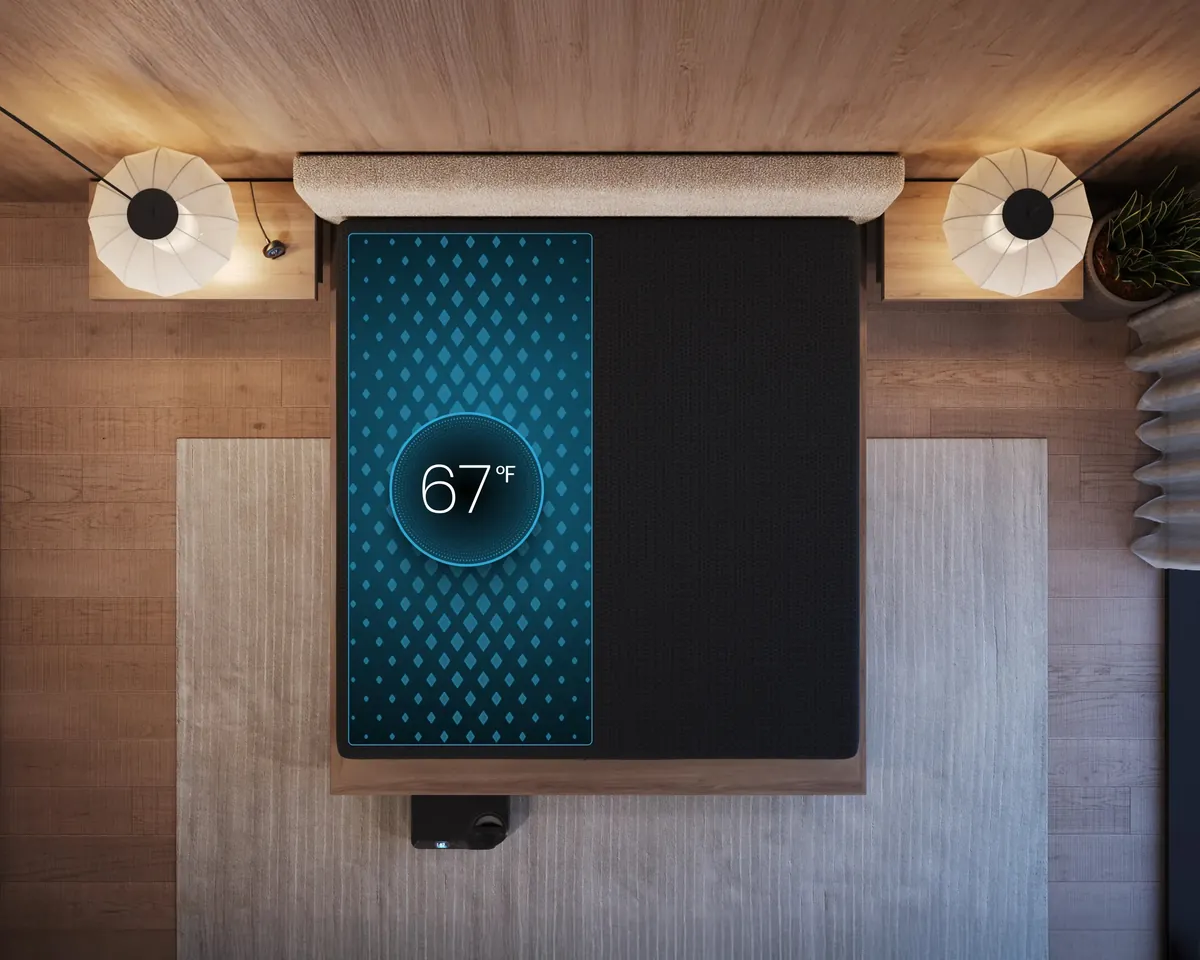
You wake at three in the morning. Not from a noise, not from a dream. You are just awake, the sheet is damp, and one leg is already outside the covers looking for cold air. In twenty minutes you will be asleep again. In the morning you will feel like you never really were.
Most people file this under bad sleep and go looking for a habit to fix. Less screen time. An earlier dinner. A better mattress, eventually, because the mattress is old and that is the story everyone tells.
There is a duller explanation, and it is mechanical. Falling asleep is not a decision your brain makes. It is a temperature change your body has to complete first, and the surface you are lying on decides whether that change is allowed to happen.
01 The switchSleep does not start in your head. It starts with a drop.
Here is the part that reframes the whole problem, and it is not controversial. Sleepme, which builds bed cooling systems and publishes a long guide on sleep temperature, states it plainly:
Your body needs to drop its core temperature by 1 to 2°F to initiate and maintain sleep. A cooler bedroom makes that easier. Sleepme, What Is the Best Sleeping Temperature?
Two words in there are doing the work. Initiate and maintain. The drop is not only how you fall asleep, it is how you stay asleep. Your hypothalamus runs the process, and the same guide notes that during REM sleep your body regulates its own temperature far less effectively, which is exactly when an overheated bed does the most damage.
Now put those two facts next to your three in the morning wake up. REM periods get longer as the night goes on. The stretch where you are least able to regulate your own temperature is the small hours. That is not a coincidence in your sleep, it is the shape of the night.
Schematic, not to scale. The size of the drop and its role in starting and holding sleep are as described in Sleepme's sleep temperature guide.
02 The wrong leverThe thermostat says 67. The surface under you does not.
Almost everyone attacks this problem through the air. Turn the bedroom down. Open a window. Buy a fan. It is the obvious move, and it is the reason so many people conclude that they are simply hot sleepers and nothing helps.
The trouble is where your body actually dumps heat at night. You are lying on roughly a third of your own surface area, pressed into foam, under a duvet. That is not a place air can reach. Sleepme's own guide for couples puts the mechanism in one sentence:
A room set to 65 degrees can still feel hot if your mattress traps body heat and radiates it back at you all night. That's why some people run a cool room and still wake up sweating. Sleepme, Help for Couples Who Disagree About Sleep Temperature, published August 13, 2026
Read that as an engineering statement rather than a marketing one and it is unkind to a lot of expensive purchases. A memory foam mattress is a good insulator. That is what the material is. Cooling the air above an insulator does not cool the insulator, and the insulator is the thing your back is touching for eight hours.
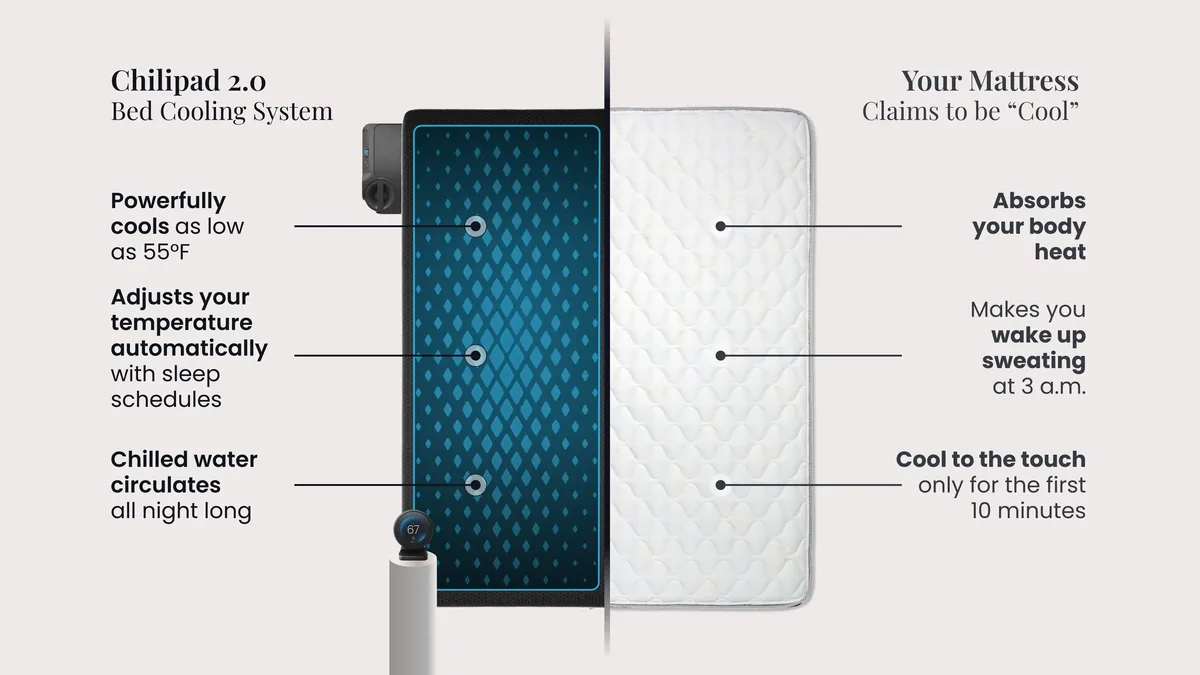
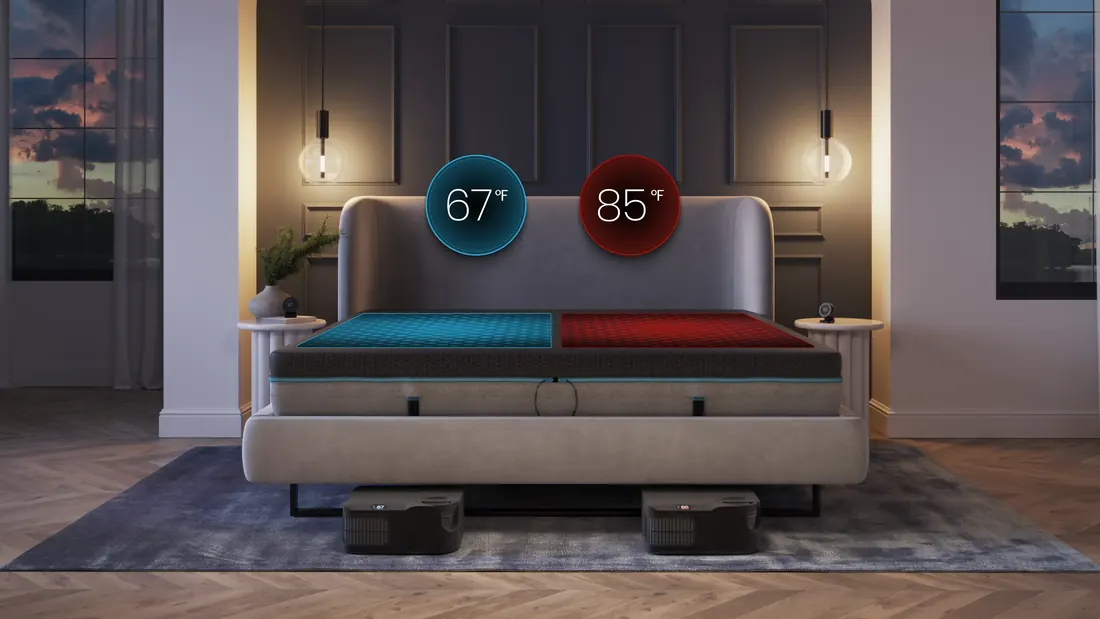
The temperature range shown is the published operating range of the Chilipad 2.0, 55°F to 115°F.
A fan does not cool a room. It moves the room around.
The bedside fan is the default answer to a hot night, and it is worth being precise about what it does. It increases evaporation from your skin, which feels like cooling. It does not remove heat from the room, and it does not touch the heat stored in your mattress.
Sleepme's guide on the subject, written by their sleep educator Ana Marie Schick, is unusually blunt for a brand page. It lists eight side effects of sleeping with a fan running on you, and the list is familiar to anyone who has done it: circulated dust and pollen, a dried out nose and throat, a stiff neck from a breeze aimed at one spot all night, dry eyes, more congestion. Their own summary line is the one worth keeping:
Fans do not cool the room. They push warm air around. Sleepme, Sleeping With a Fan On
Air conditioning has the same blind spot with a bigger bill. It cools the air in the room, which helps, and then you lie down on an insulated slab that has been absorbing your body heat since you got into bed. Cooling an entire house to fix the patch of mattress you are lying on is an expensive way to miss.
04 What water does that air cannotThe reason this is a plumbing problem, not an HVAC problem.
Water carries heat far better than air does. Sleepme puts the figure at up to 25 times more efficient than air cooling, which is why the entire category of bed cooling systems moved to water rather than to bigger fans.
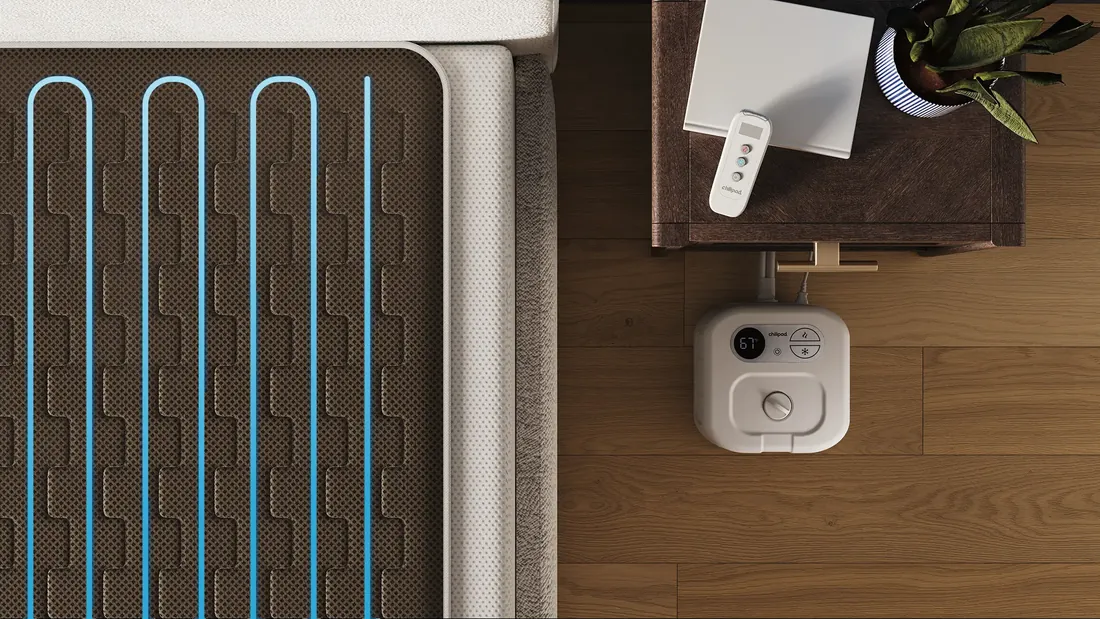
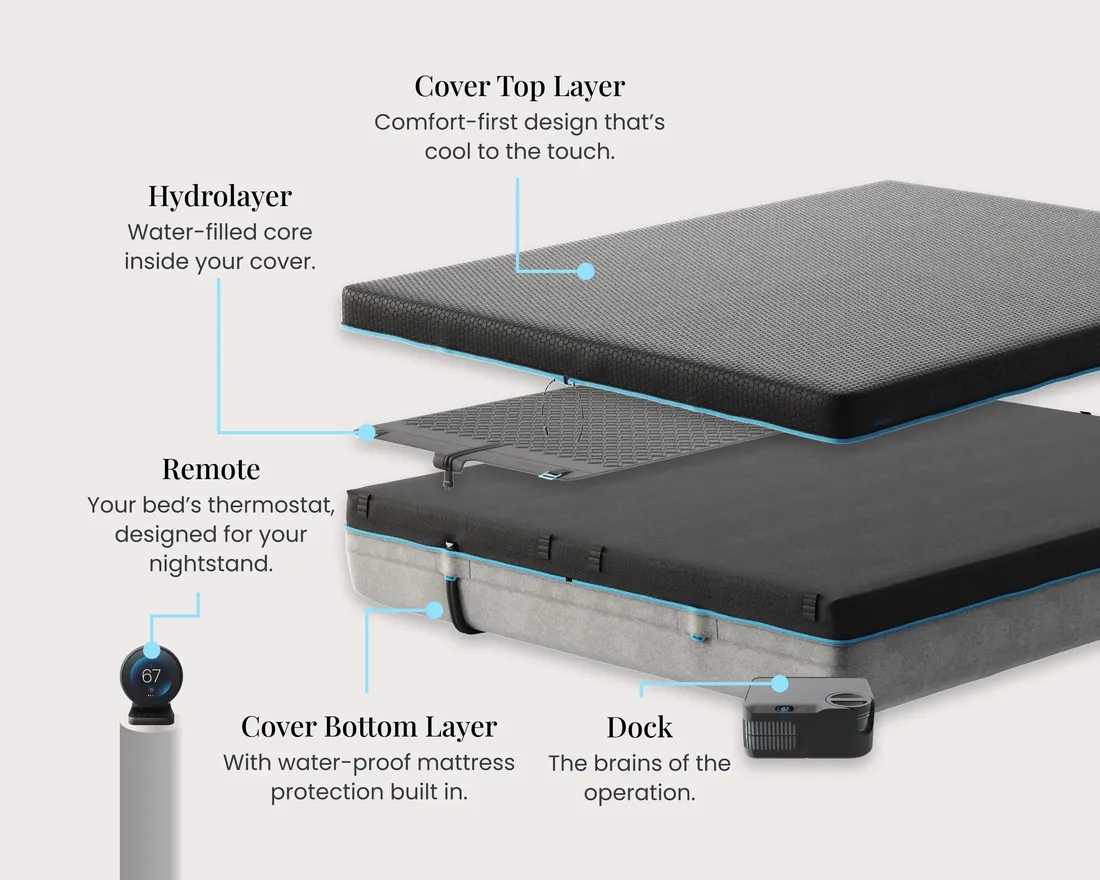
The physical arrangement is simple enough to describe in one paragraph. A dock sits on the floor beside the bed and holds a reservoir. It chills or heats the water, then pushes it through a hose into a thin membrane that lies on your mattress under the sheet, called the Hydrolayer. The water runs through ultra thin internal channels across the whole sleeping surface, picks up your heat, and returns to the dock. Nothing blows air across your face, and the heat leaves the bed instead of circling above it.
| Moving air | Circulating water | |
|---|---|---|
| What it cools | The air in the room | The surface you lie on |
| Reaches the mattress | No | Yes, it is the mattress layer |
| Two temperatures in one bed | No | Yes, one zone per side |
| Side effects reported | Dust, dry throat, stiff neck | A pump you can hear in a silent room |
Air column drawn from Sleepme's own fan guide. The pump note comes from customer reviews quoted further down this page, not from the brand.
05 The trial nobody at the brand ranSeventeen adults, a bedroom held at 30°C, and a university with no product to sell.
Most sleep gear is sold on testimonial. This category has something better. In May 2026, researchers at Loughborough University published a study in the journal Building and Environment that tested a low energy, water based cooling mattress topper in deliberately overheated bedrooms.
Seventeen adults slept in a controlled bedroom held at 30°C, roughly 86°F, with and without the topper. The university reported the outcome in its own press release.
Loughborough University, Cooling mattress toppers an effective and low-energy way to improve sleep in hot bedrooms, study finds, 29 May 2026. Study by Jaydeep Bhadra, Dr Arash Beizaee and Dr Iuliana Hartescu, published in Building and Environment, n=17.
Nineteen minutes sounds modest until you notice what it is. It is not nineteen minutes of lying in bed. It is nineteen minutes of sleep that the heat was taking, given back, on every hot night. Ten minutes shaved off the time it takes to fall asleep is the part you feel personally, because that is the stretch you spend flipping the pillow.
The researchers framed it as a climate and energy result rather than a wellness one. Dr Beizaee noted that as hot nights become more frequent in the UK, many homes are not equipped to cope, and that the study points to the potential of a low energy, localized cooling solution. Cooling one bed rather than one building is the point.
The brand's own reading of the same study
Sleepme cites this trial on its product pages and reports the participant ratings from it: sleep satisfaction up 54%, morning freshness up 44%, time to fall asleep down 36%, time spent awake down 40%. Those are the brand's published figures from the same n=17 work, and they are worth reading as directional rather than as a promise about your bedroom.
30 night sleep trial. Free shipping in the contiguous US.
06 Two people, one thermostatThe argument you are having is not about preference. It is about heat output.
If you sleep alone, the rest of this is an equipment decision. If you share a bed, there is a second problem sitting on top of the first, and no single number on a wall will ever solve it.
Sleepme published a guide on this on 13 August 2026, and the number in it is the one to remember: 58% of couples disagree on the best room temperature for sleep. More than half of all couples sharing a bed. The same guide reports that 63% of couples sleep apart for most of the night, and that more than one in three Americans has slept in another room to avoid bothering their partner.
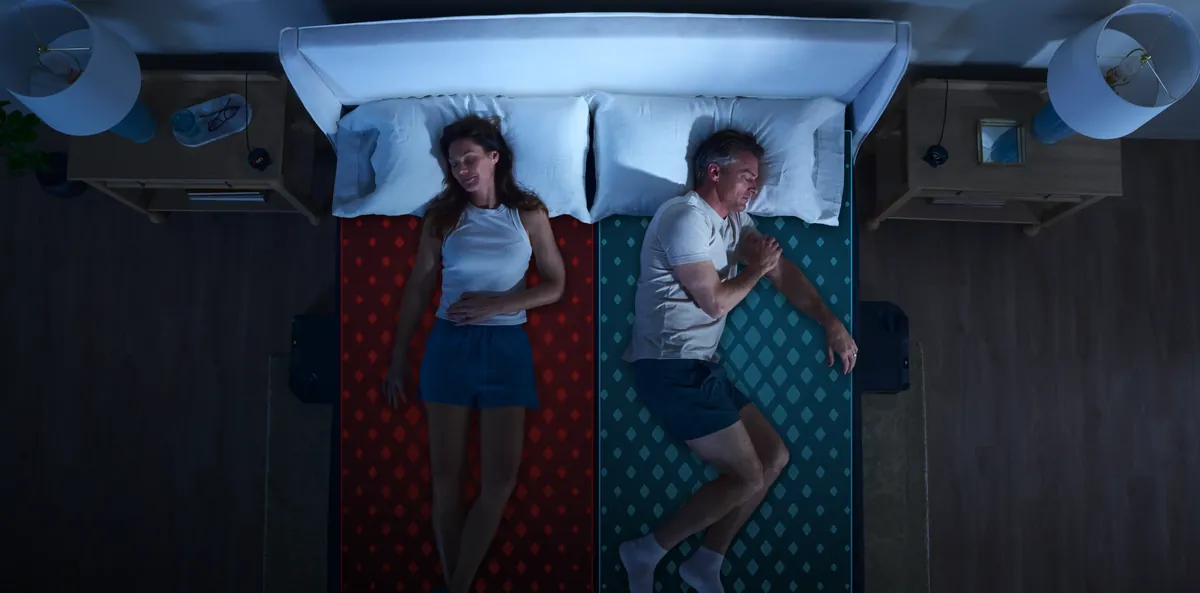
The reason this is not a personality clash is that bodies genuinely run at different temperatures. Muscle produces heat at rest, so more muscle mass usually means a warmer sleeper. Metabolism and body size shift it further. A single thermostat setting always leaves one person compromised, which is why the compromise usually ends with somebody moving to the spare room.
My wife likes a cold bed, and I like a warm bed. My wife would never want to sleep without this device! She wishes that it could even go colder. Richard Rizzo, five stars, 21 June 2026, Trustpilot
That review is the entire dual zone argument in three sentences. Two zones means two water layers and two set points on the same mattress. Nobody wins the thermostat and nobody loses it, because there is no longer one thermostat to win.
A dial on the nightstand, because nobody reaches for a phone at 3 a.m.
Sleep technology has a quiet failure mode. It works, and then it asks you to unlock a phone in a dark room to change something, and within two weeks you stop adjusting it and it becomes a mattress topper you paid a lot for.
The 2.0 answers this with a physical remote that sits on the nightstand and works like a thermostat dial. You reach out, you turn it, you go back to sleep. Their own line for it is the honest one: designed for your nightstand, not your phone.
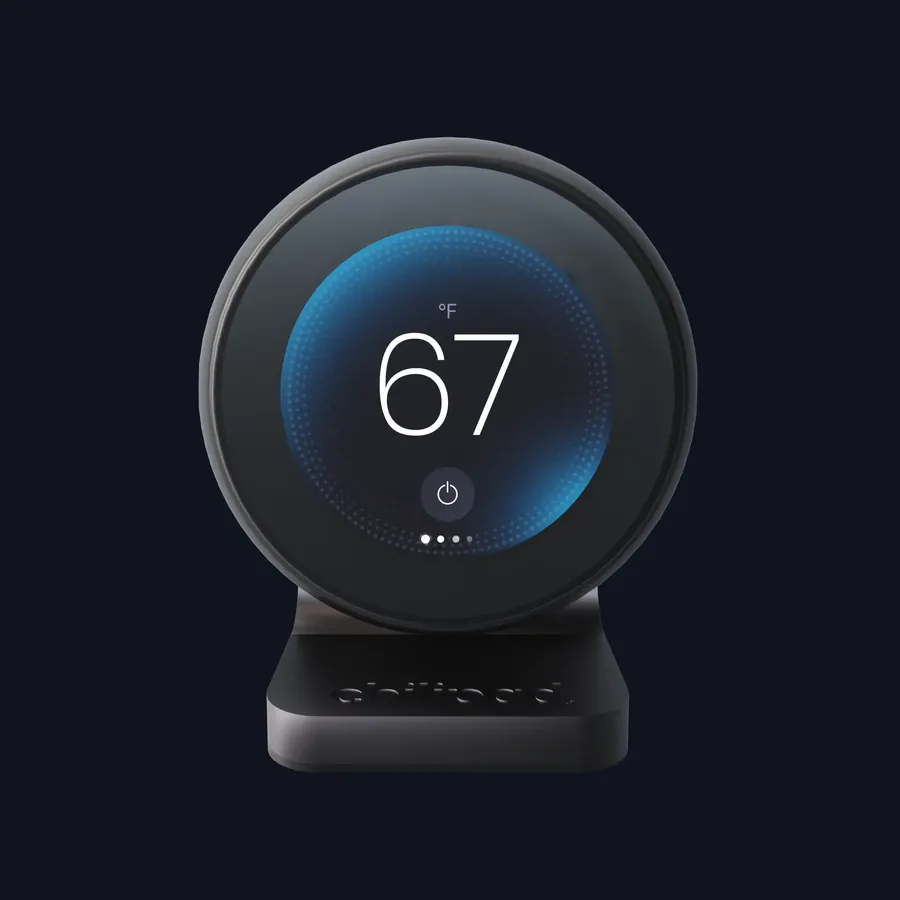
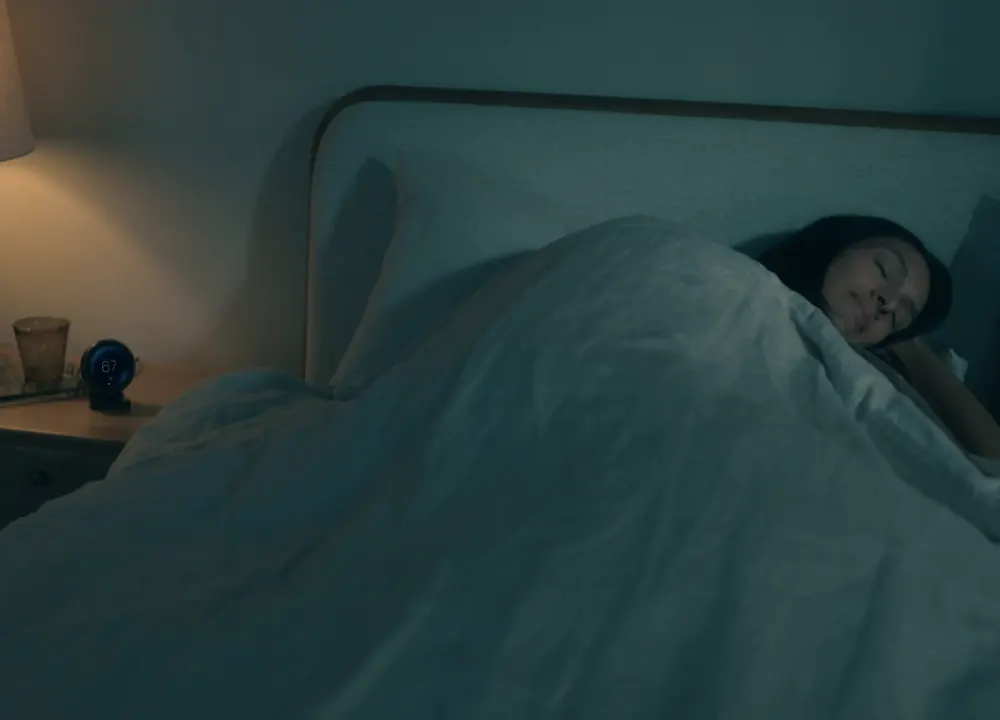
Left, the dial and its low glow display showing current temperature, target, humidity and alerts. Right, optional presence sensing, which starts your schedule when you actually get into bed rather than at a fixed hour.
The other half is the schedule. Your body does not want one temperature all night, it wants the curve from the first diagram. The app builds that curve once and then runs it, without a subscription, and a warming step at the end replaces the alarm clock.
Built from the Sleep Schedule and Warm Awake features described on the Chilipad 2.0 product page. Sleepme states that scheduling and temperature control require no subscription.
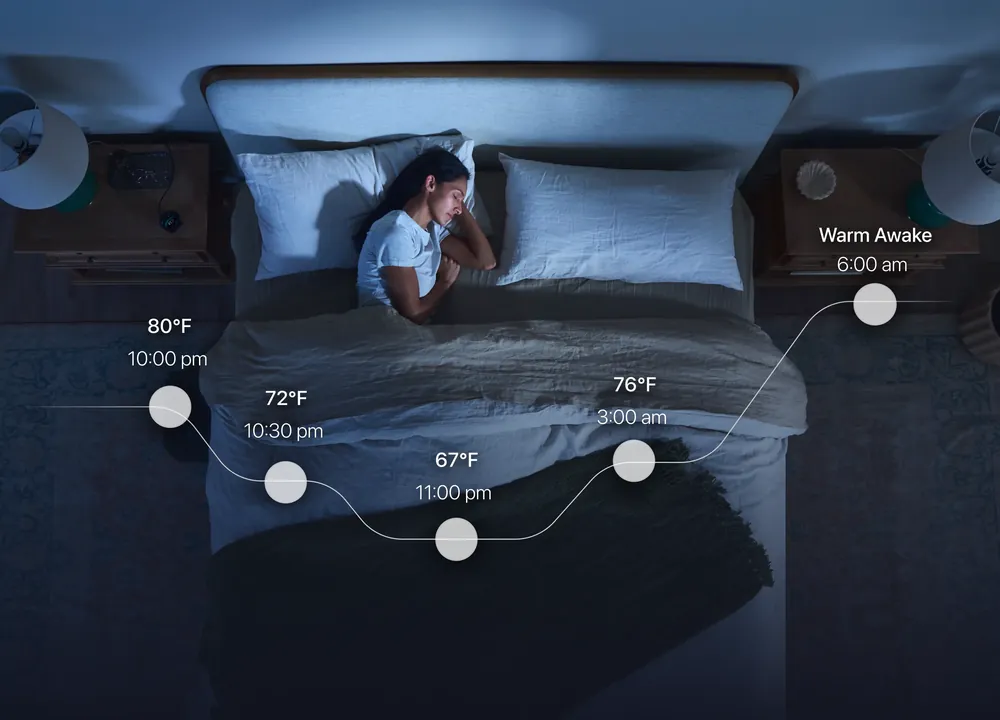
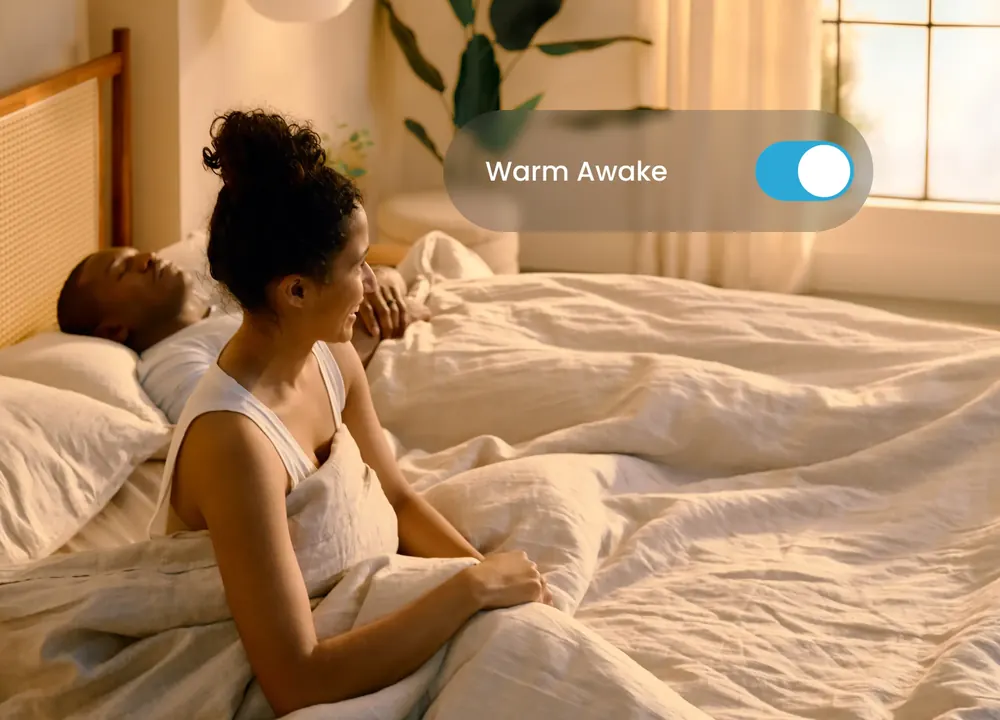
The schedule editor, and Warm Awake, which raises the bed temperature to trigger a natural wake response instead of a jarring alarm.
08 What it is, and what it costsFour parts, a dial, and a price that deserves to be stated plainly.
The Chilipad 2.0 starts at $1,599. That is a serious number for something that goes on a mattress, and a page that hid it until the last screen would not deserve your attention. Here is the full picture as published on their site on 14 August 2026.
| Configuration | Price | Coverage |
|---|---|---|
| Half Full, Twin XL, Half Split King | $1,599 | one sleeper |
| Half Queen | $1,699 | one sleeper |
| Half King, Half Cal King | $1,799 | one sleeper |
| Chilipad Cube | from $594 | entry level, manual control |
Two sleeper coverage is two of these systems, and Sleepme states you can start with one side and add the second later.
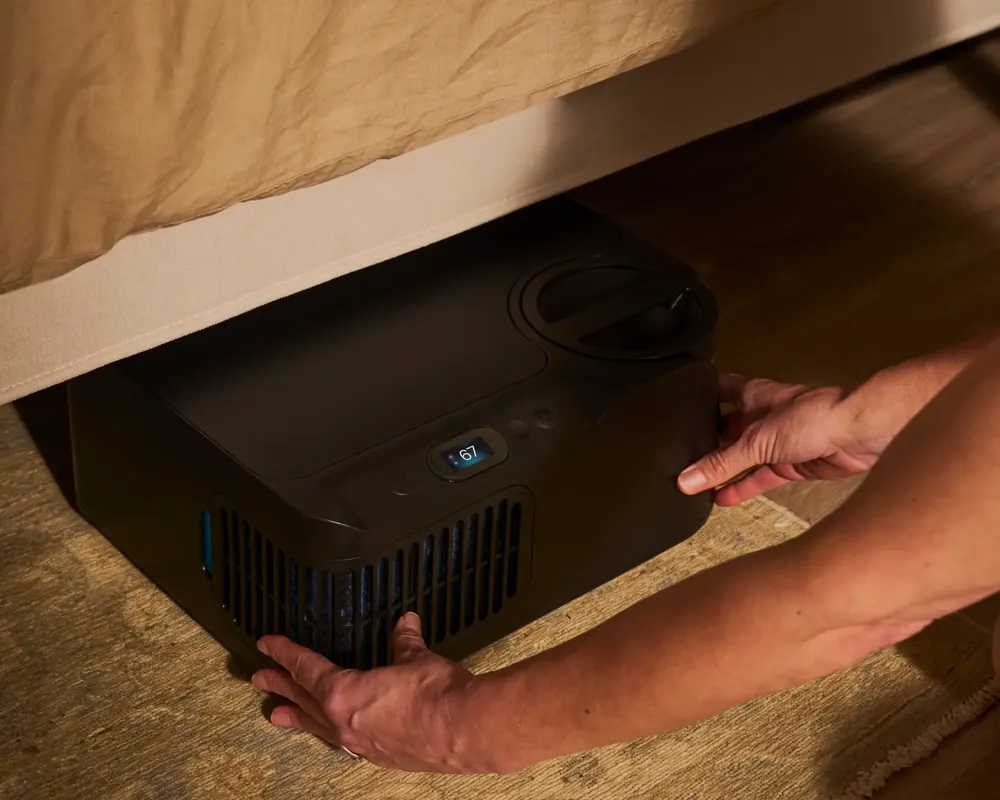
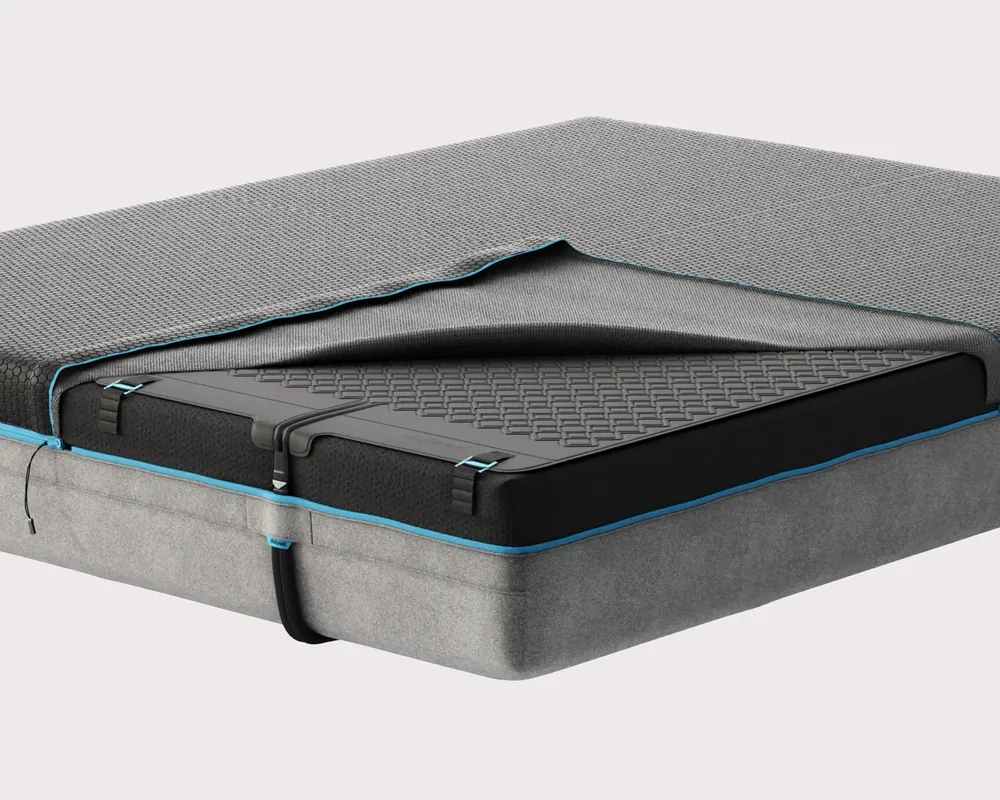
Where the dock lives, and the layer it feeds. It fits mattress heights from 10 to 16 inches and works on adjustable and split adjustable bases.
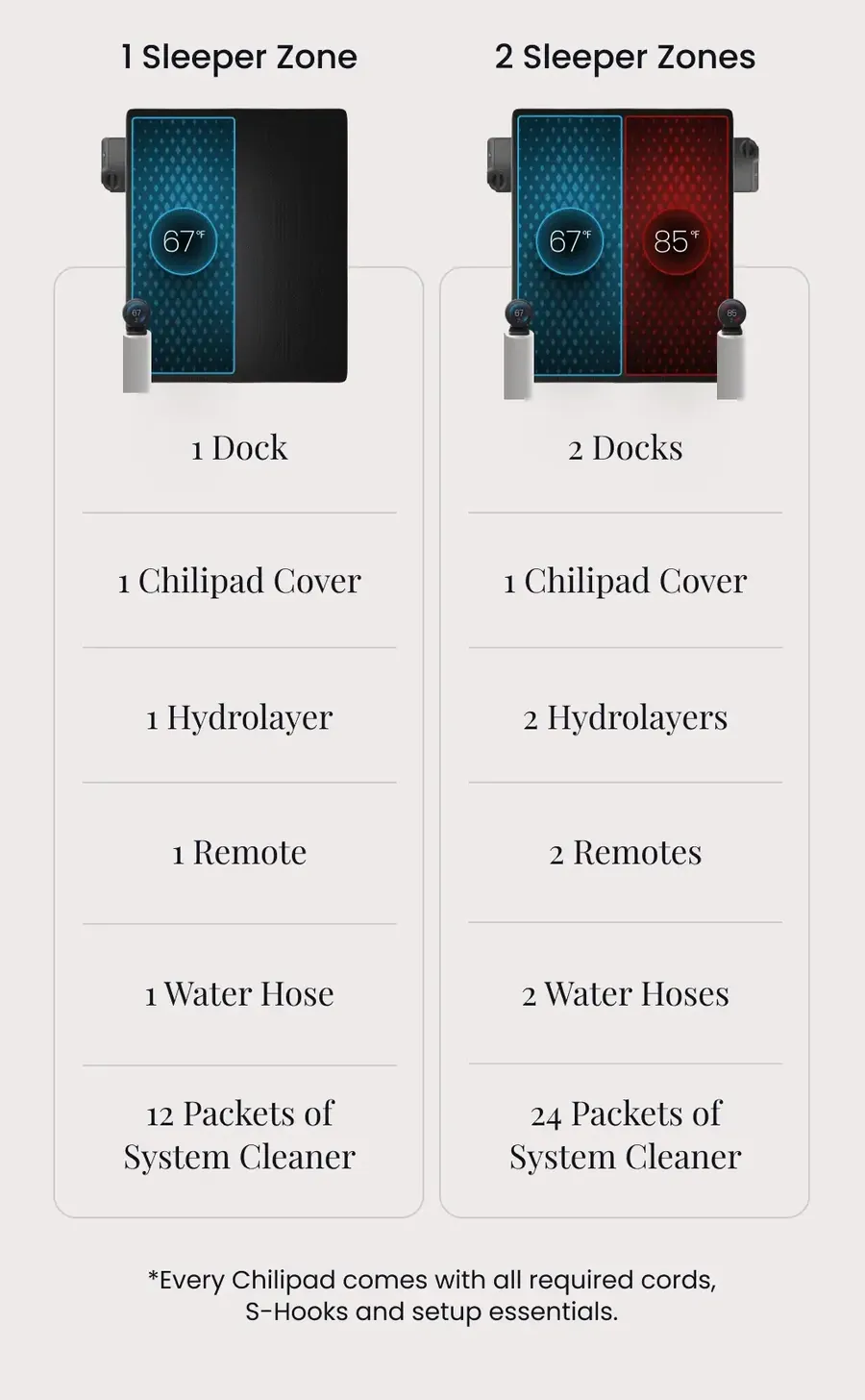
- No subscription. Temperature control, sleep schedules and the app are free forever, and the hardware keeps working without an internet connection.
- 30 night sleep trial with free returns, and a two year limited warranty.
- HSA and FSA eligible, subject to eligibility, through Truemed.
- Core electronics designed and assembled in the USA, near Charlotte, North Carolina. Soft goods are made by partners in Asia.
- Setup is seven steps and looks like fitting a sheet: stretch the cover over the mattress, unzip, lay the Hydrolayer in, connect the hose, add distilled water and a cleaner packet, power on.
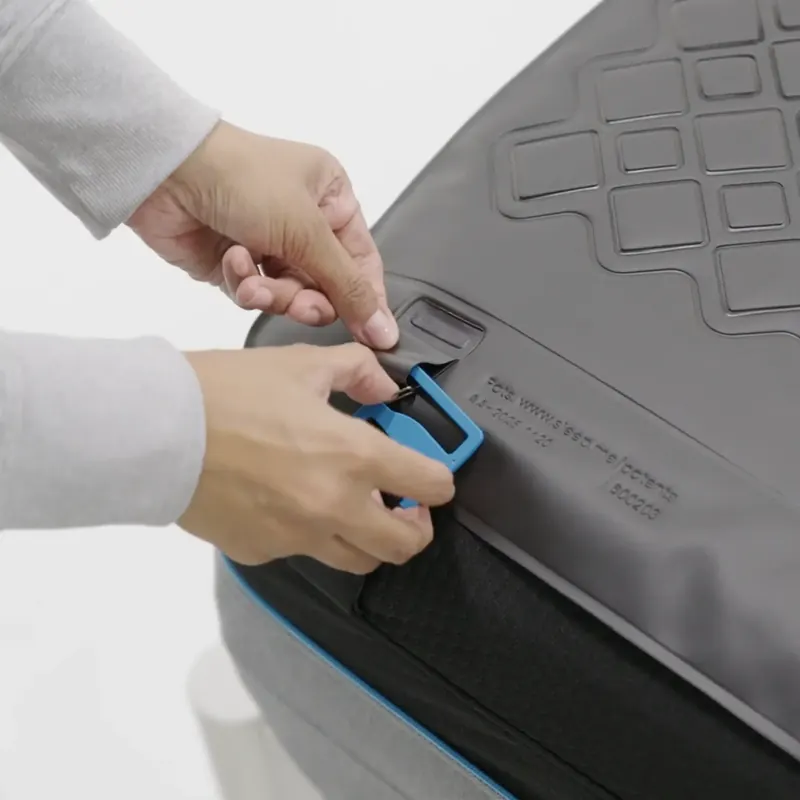
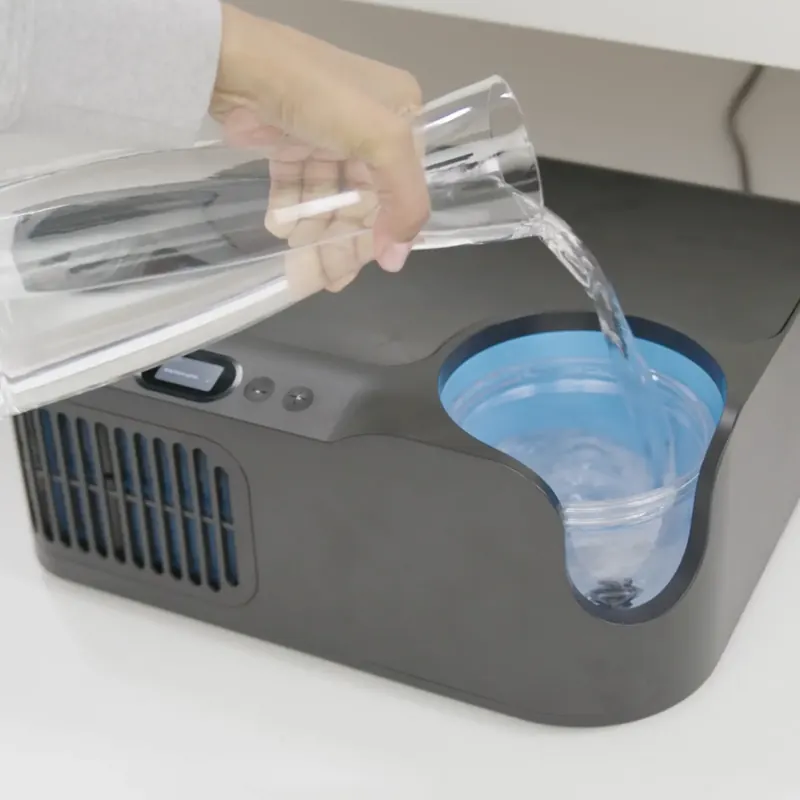
Two of the seven setup steps, from Sleepme's own installation sequence.
09 The honest partThree things buyers complain about, in their own words.
Sleepme holds a 4.0 TrustScore across 1,476 Trustpilot reviews, read on 14 August 2026. That is a good score, not a perfect one, and the complaints cluster into three groups that are worth knowing before you spend $1,599.
1. The wait, right now
The 2.0 ships in numbered waves, and demand has pushed those dates out. On the day this page was written the product page was on Wave 14, 57% claimed, shipping by 27 August. Buyers in the middle of a heatwave are not enjoying it.
“I am DYING waiting for my product to arrive. I need it! No complaints other than that I am sweating my arse off.”
Theresa Cullen, two stars, 13 August 2026, Trustpilot
2. The pump makes a sound, and people differ on it
“Works very well but makes a very high frequent sound that I could only get rid of by using really good ear plugs.”
Frederik Cramer, four stars, 9 August 2026, Trustpilot
Others report the opposite on the same hardware, which is what a 30 night trial is for. “I find it very quiet and don’t feel the tubes at all. Two nights of less restless sleep.”
A Trustpilot reviewer, four stars, 10 August 2026, Trustpilot
3. It cools a bed, not a room
The same reviewer notes a real limit, and it is the fairest sentence on this page: “Doesn’t cool down to lowest temperature in the summer, due to the higher room temperature.” A very hot room fights the system. It does not stop it, but if your bedroom sits at 85°F you should expect the surface, not the air, to be the thing that changes.
Frederik Cramer, four stars, 9 August 2026, Trustpilot
Who should not buy this
If your sleep is broken by noise, light, a snoring partner, alcohol or a racing mind, temperature is not your bottleneck and this is an expensive way to find that out. If you need it this week, check the shipping wave before you order. If a faint pump in a silent room would keep you awake, use the trial deliberately rather than hopefully.
What long term owners actually say.
★★★★★
Critical to good sleep
“I’ve been using a Chilicube from Sleepme for about 4 years and it has made a huge difference in my ability to get a good nights sleep. My family rolls their eyes about it, but I even pack it for vacations!”
James Leonard, 15 June 2026, Trustpilot
★★★★★
Great product
“It keeps me cool and sweat free all night. My only complaint is that it sometimes will tell me to add more water, even though it looks full. But overall I’m very happy with it and have noticed a huge difference in my sleep quality since I got it!”
Whitney B, 13 July 2026, Trustpilot
★★★★★
I sleep better cooler
“My experience was that the product works. During hot weather I keep the temperature set at 55. This certainly helps during the hot weather. I look forward to using the heat setting when it gets colder.”
Kate Stratton, 30 July 2026, Trustpilot
★★★★★
Very happy with Chilipad Cube
“I feel like I got my life back. Poor sleep from overheating was destroying my brain power and work capacity. Chilipad Cube fixed the problem.”
Jon, 7 August 2026, Trustpilot
Sleepme also publishes named endorsements from people who had no obvious reason to talk about a mattress topper in public.

“This pad has revolutionized the ability to create the perfect sleep environment in any bedroom. It simply lies below your sheets and keeps you comfortably cool all night long.”
Dr. Mark Hyman, physician and author, quoted on sleep.me

“When I say the [Chilipad] is the single greatest thing that has happened to my sleep ever, I mean it.”
Dr. Kelly Starrett, doctor of physical therapy, quoted on sleep.me

“I got the Chilipad underneath and got that cranked down to 60.”
Dan Campbell, head coach of the Detroit Lions, on the Pardon My Take podcast, quoted on sleep.me
The thing you can change is not the weather, and it is not your habits.
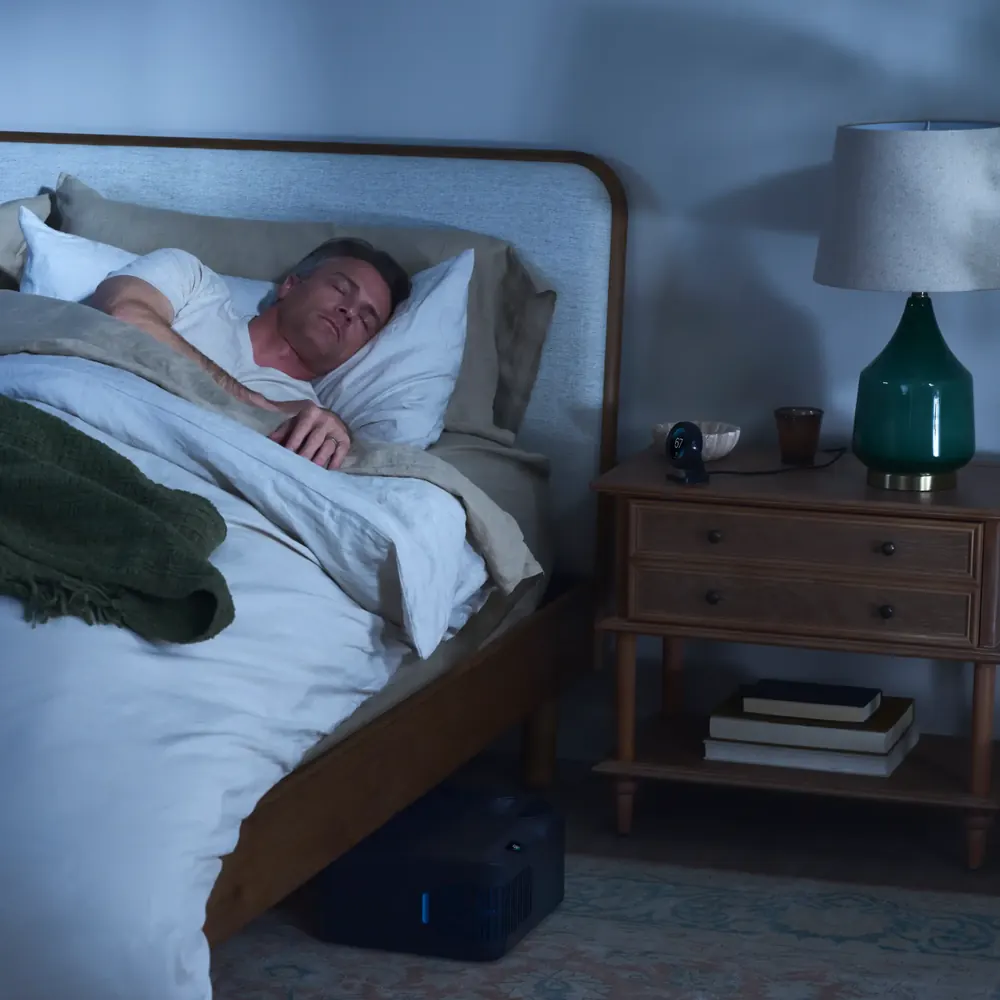
You cannot make August cooler. You are not going to out discipline a hot mattress with a better bedtime routine. What you can change is the one surface that has been quietly refusing to let your body finish a one to two degree drop it has been trying to complete every night for years.
It goes on the bed like a fitted sheet. It runs at whatever number you set, from 55°F to 115°F, on your side only if you want. And if it turns out that temperature was not your problem after all, you have thirty nights to find out and send it back.
Stop cooling the room. Cool the surface.
The Chilipad 2.0 runs temperature controlled water through a thin layer under your sheet, holds your number all night, and gives each side of the bed its own. From $1,599, no subscription, 30 night trial.
See the Chilipad 2.0 on sleep.meFree shipping in the contiguous US. Two year limited warranty. HSA and FSA eligible.